
HYBRID STRUCTURES FOR ARCHITECTURE
Shaping the world
with natural resources.
Where improbable ideas become physical structures.
Architecture begins with imagination. With a sketch that captures a gesture — long before anyone knows how it will stand, what it will be made of, or whether it can even be built. That moment is not naive. It is the clearest the idea will ever be.
Somewhere between that clarity and execution, the idea dies. Not because it was technically impossible. Not because the budget ran out. But because no one entered the conversation early enough to understand what was actually being asked — and what it would take to protect it.
We believe the future of construction lies not in replacing traditional materials, but in recombining them in ways that have never been done before. Timber, steel, aluminium — materials with long cultural and structural histories — become the stable backbone. Natural fibers like flax, hemp, and basalt weave themselves around them, forming new patterns, new logics, new geometries. The result is a hybrid architecture that feels both ancient and entirely new — curved, branching, fluid, lightweight, structurally expressive.
Designers today explore an expanding digital universe. Parametric systems, AI-generated forms, evolutionary algorithms — they open doors to shape languages that traditional construction simply cannot follow. These shapes are often dismissed as unbuildable fantasy. We disagree. We understand the logic beneath these geometries — the flow of forces, the continuity of fibers, the behavior of materials under load and over time. We have the fabrication technologies to translate digital speculation into physical, structural presence.
FROM SKETCH TO STRUCTURE
The most radical thing a structure can do is remain exactly as it was imagined.
3 AREAS OF EXPERTISE
What we do — end to end
01
Full Project Support
From the first structural question to the finished component. We work with fiber-reinforced composites across timber, metal, and concrete substrates — advising on material selection, layer architecture, load paths, and surface specification. German engineering precision, applied to architecturally driven briefs.
LEARN MORE
02
Parametric & Biomimetric Fabrication
Robotic filament winding and fiber placement for freeform and algorithmically generated geometries. Structures that no conventional process can produce — wound, layered, and cured with sub-millimetre repeatability. One-off prototypes and serial production from a single workflow.
LEARN MORE
03
Manufacturing & Supplier Coordination
In-house production or coordinated delivery through our European fabrication network — spanning composite specialists, timber engineers, metal fabricators, and concrete contractors. One point of contact. Full documentation. No translation loss between design and site.
LEARN MORE
OUR APPROACH
"Material intelligence begins where conventional construction ends."
Most fabricators receive a drawing and produce what's on it. We read a drawing and ask what it's trying to become. That conversation — between structural logic and design intent — is where HFS operates.
HOW WE WORK
Our Process — designed around the architect
01
Concept Evolution
We sit with the idea. We explore its geometry, its atmosphere, its structural intention — studying how forces move and how materials can flow with it rather than against it.
02
Material Choreography
We determine where fiber wants to align with curvature. Where timber provides stability. Where metal interfaces are necessary. Where hybridisation unlocks something entirely new.
03
Fabrication Logic
How will this curve be wound? How will this node be layered? How do we assemble without losing the gesture of the design? We connect the digital and physical worlds.
04
Real-World Delivery
Prototyping, scaling, manufacturing, logistics, installation — we remain involved until the final component is in place, carrying the same integrity as the original sketch.
MATERIALS
What we work with
FIBERS
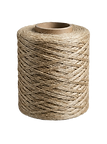
FLAX
Fine texture, precise workability. Ideal for exposed surfaces with high aesthetic demands — cladding, interior linings, and visible composite elements.

HEMP
High tensile strength, lightweight, bio-based. Primary fiber for structurally loaded elements — facades, shells, and enclosures where performance and sustainability converge.

JUTE
Distinctive surface character. For projects where the material is visible and integral to the architectural concept — acoustic panels, bespoke elements, and cultural spaces.

SISAL
Coarse, high-tensile plant fiber with excellent crack-bridging properties. Used in cement and concrete composites for structural reinforcement — durable, moisture-resistant, and fully biodegradable.

BASALT
Derived from volcanic rock. High thermal resistance, excellent chemical durability, and superior mechanical properties — a bridge between natural origin and technical performance.

GLASS
Versatile, cost-effective, and proven across complex geometries. Frequently used in hybrid composite systems alongside natural fibers to optimize structural behavior.

CARBON
Exceptional stiffness and tensile strength at minimal weight. For components where structural performance is the primary driver — long spans, precision connections, and high-load elements.

ARAMID
Known commercially as Kevlar and Twaron. Exceptional impact resistance and energy absorption at very low weight — used where dynamic loads, vibration, or blast resilience are structural requirements.
HYBRID SYSTEMS
FIBER + TIMBER
Natural fiber composite wound around timber substructure — combining warmth and tactility with engineered structural depth.
FIBER + METAL
Lightweight fiber composites on steel or aluminium frames. Precise connection details for demanding structural and facade applications — combining the strength of metal with the formability of composite systems.
FIBER + CONCRETE
Natural or technical fiber as lost formwork or integral surface element in concrete — structural presence with material expression.